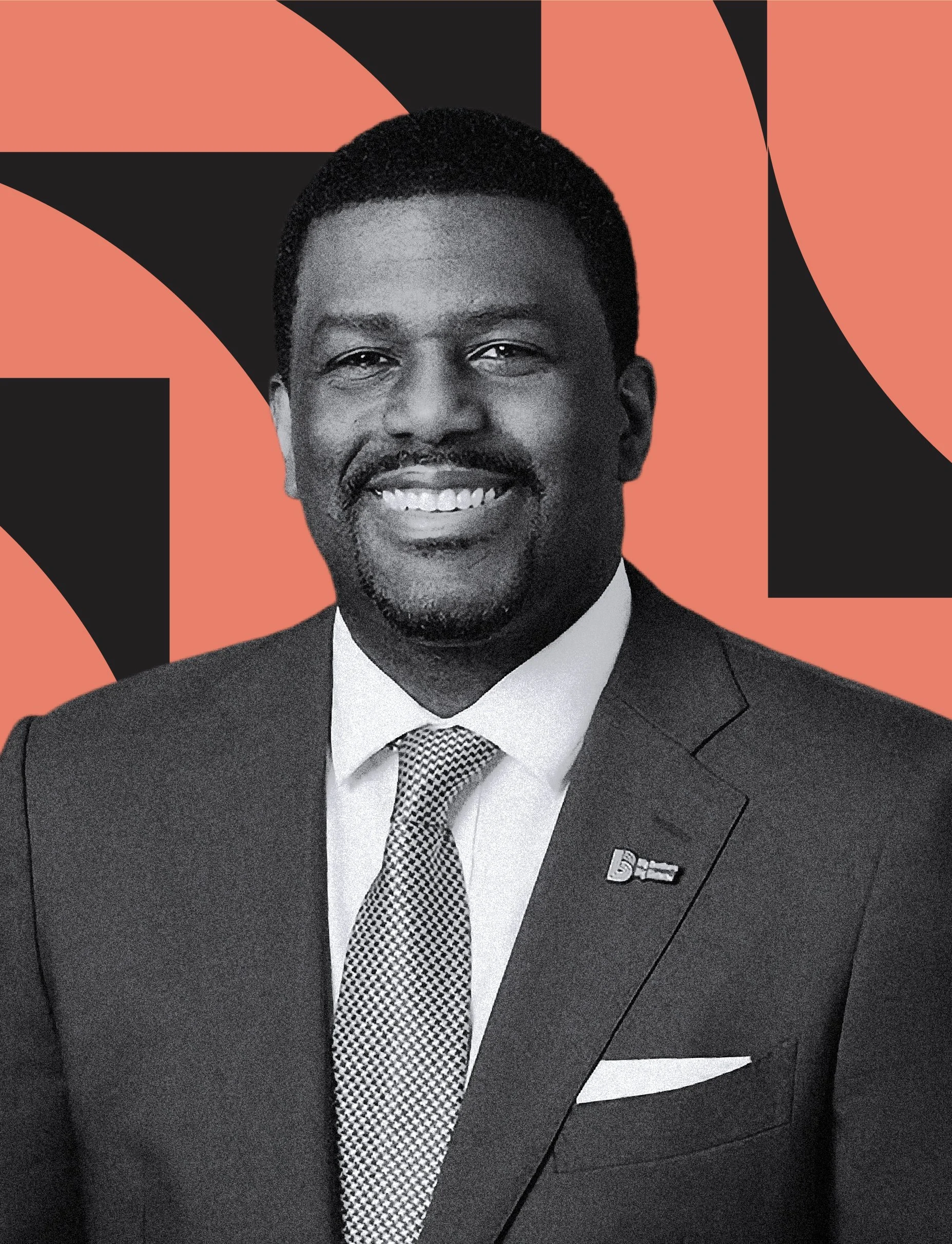

Jennifer Blatz
CEO, StriveTogether
THE ARCHITECT AWARD
Redesigning systems, policies, or conditions that keep problems entrenched; working at root causes rather than symptoms
Areas of focus: Economic development / Cradle to careerAbout
strive together
StriveTogether is a national network of community partnerships working toward a future where everyone can thrive. Rather than running programs directly, StriveTogether changes the way communities work together by helping local cradle-to-career partnerships align data, policy, and cross-sector collaboration around shared outcomes for young people. The network has set an ambitious goal of transforming 4 million futures: 4 million more milestones met or on track to be met by young people on a path to economic mobility by 2030.
Learn moreget to know jennifer
What inspired you to do this work? Was there a particular moment or person or incident that sparked a new level of commitment?
In 2006, as we were preparing to launch the original Strive Partnership in Cincinnati, we were planning to build a new program focused on college access. But we got a critical wake-up call from the county coroner at the time, Dr. O'Dell Owens. At one of our meetings, he stood up and warned us that unless we started at cradle, and not at college, he'd "keep seeing dead kids" on his table. He described the region as "program rich but system poor." That moment reframed everything about our approach. Rather than start a new program, we needed to strengthen and connect the practices already working and build shared accountability across all our institutions. Dr. Owens’ warning is the reason StriveTogether exists today to transform the systems of opportunity in communities.
What drives you to keep questioning the status quo and building new ways to overcome tough challenges?
Communities across the StriveTogether Network are aligning around outcomes for kids and moving data and resources toward those furthest from opportunity. This work is critical for every young person in these places; it’s critical for their families and communities; and it’s critical for our country.
The work of place-based partnerships is not adjacent to the health of our democracy. It is a load-bearing part of it. A democracy survives on the belief, held by enough people, that the system is capable of including them, of working for them and their kids. When that belief erodes, democracy weakens in concrete ways. People disengage. Trust collapses. Communities fracture.
Helping communities build the civic infrastructure to get better outcomes for young people is one of the most direct investments in democratic resilience that exists. It’s local democracy in its most practical form: people deciding together what they owe their children and then building the systems to deliver it. Every young person in the country is counting on us to continue.
What solutions are you working on that make you excited and hopeful for the future?
I'm energized by partnerships that are moving billions of public dollars toward proven cradle-to-career outcomes and building real workforce pathways— proof that place-based, data-driven systems change can scale.
In Maryland, Baltimore's Promise just announced funding received through Governor Moore’s Industry Apprenticeship Accelerator. This work will build registered apprenticeship pathways in healthcare for high schoolers, expanding a healthcare pipeline organized around real workforce demands and creating direct paths for young people to good jobs.
Pathways work is at the forefront across the country, including in Dayton, Ohio, where Learn to Earn Dayton connects K-12 districts, employers and postsecondary partners. They’re creating a system where supports like career navigators, dual enrollment and work experience can reach every Dayton student. Through their advocacy work on Ohio’s Senate Bill 208, this approach will reach further across the state through more regional partnerships.
And we know that investments have to start early. Last year, the Wisconsin Partnership helped secure a historic $330 million investment in early childhood and literacy, while Connecticut passed landmark legislation that included $600 million for childcare affordability and workforce stability.
These wins happen because communities have the data to prove what works, the partnerships to scale it, and the persistence to carry it into policy. That’s what makes me hopeful — that we have insights and lessons to guide us in doing this work across the country.
What are the "unlocks" — approaches, practices, or principles — that have helped you be effective in building this innovative approach to place-based opportunity development?
Three key approaches have unlocked our impact over the two decades of this movement:
Shared, transparent data as a common language across sectors that don’t naturally trust each other. Schools, employers and government operate on different timelines, with different incentives and different definitions of success. Shared data can change that. It allows sectors to agree on a common vision and redirect energy toward creating it.
Treating communities as the source of what works, then connecting them to one another so they can learn. Local leaders, young people and families know what they need. Our job is to support their solutions and connect them to the other places facing the same challenges, so no one has to start from scratch.
Translating practice into good policy. Policy is the way we ensure that improvement in outcomes can be sustained over the long term. It ensures that wins are backed by the structures and funding that they need, and it makes resources available to more places and more young people. Together, data, community-led solutions and policies that center young people have turned local successes into a national movement.
Expert advisor

Nancy Zimpher, PhD
President, National Association of Higher Education Systems | Chancellor Emeritus, State University of New York
Nearly two decades after I helped found StriveTogether, it's deeply gratifying to see its mission continue to deliver measurable progress for young people. Under Jennifer’s exceptional leadership, the organization has remained true to its belief that lasting change comes from communities working together to transform systems. I hope others learn from this work that unwavering collaboration, accountability, and commitment to outcomes can turn an ambitious idea into national impact.
“

more awardees
-
![Black-and-white portrait of a smiling man with glasses, wearing a white shirt, against a yellow and black geometric background.]()
THE INVENTOR
Ken Ikeda
CEO, CAST (Community Arts Stabilization Trust) -
![A man in a suit and tie speaking, with a background featuring a red and black graphic design.]()
THE SUSTAINER
Artis Stevens
CEO, Big Brothers Big Sisters of America -
![A woman wearing a hijab and a black sweater with a white pattern stands against a geometric background of black and purple shapes.]()
THE ADVOCATE
Zarqa Yaftali
Founder and Chairperson, Women and Children Research and Advocacy Network -
![Black and white photos of two women smiling, set against a black background with a large gold cross behind them.]()
THE INNOVATOR
Sarah Alexander & Olivia Rosenthal
Co-Founders and Co-CEOs, Patch Caregiving -
![Close-up of a woman and a man smiling, black-and-white photos blended with a red and black geometric background.]()
THE CATALYST
Catherine Casey Nanda & Amon Anderson
Co-Founders and Managing Partners, Acumen America -
![Black man with dreadlocks and a beard, wearing a black sweater and a collared shirt, in front of a blue and black geometric patterned background.]()
The builder
Adair Mosley
CEO, GroundBreak Coalition -
![A woman with shoulder-length wavy hair, smiling, wearing a blazer and a necklace, against a geometric yellow and black background.]()
The mobilizer
Alexa Arnold
CEO & Co-Founder, The TAG Movement -
![A black-and-white portrait of a smiling man wearing glasses and a light-colored, textured sweater, set against a geometric background in purple and black.]()
The integrator
Sixto Cancel
Founder and CEO, Think of Us -
![Black and white portrait of a smiling woman with dark hair, wearing a blazer and white top, against a geometric coral and black patterned background.]()
The architect
Jennifer Blatz
CEO, StriveTogether -
![Black and white photo of a woman speaking at a conference or event, wearing a blazer and a t-shirt with partially visible text, with a graphic background featuring blue and black geometric shapes.]()
The storyteller
Vanessa Renae
Co-Founder and President, GirlTREK